
My position
THIS WAS NOT LIBERATION.
IT WAS CONTROL.
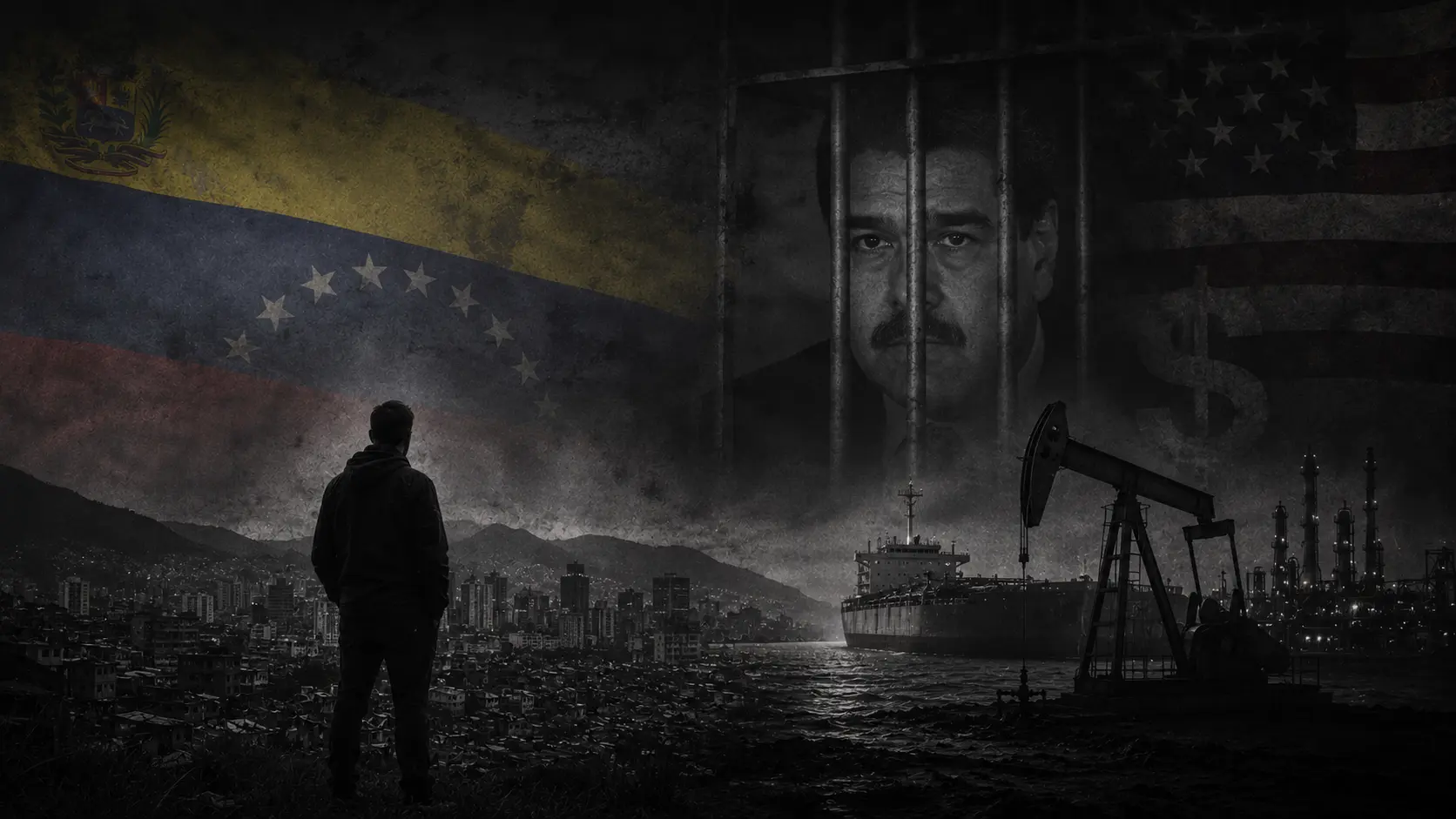
On January 3, 2026, U.S. forces entered Venezuela, captured President Nicolás Maduro and his wife, and flew them to the United States for prosecution. President Trump said the United States would run Venezuela until a transition it considered safe and proper. American officials immediately put Venezuelan oil at the center of the new order.
You cannot invade a country, seize its head of state, take command of its most valuable resource, and expect the word “freedom” to erase what happened.
I have no duty to defend Maduro’s government. Venezuela’s people have every right to demand democracy, safety, and accountability from their own leaders. But abuse by a government does not transfer ownership of a nation to Washington. The people of Venezuela are not property, and neither is their oil.
The stated policy
THE UNITED STATES TOOK CONTROL
OF THE OIL SALES.
Four days after Maduro’s capture, U.S. officials said America needed to control Venezuela’s oil sales and revenue indefinitely. Their stated reasons included stabilizing the economy, rebuilding the oil sector, and making sure Venezuela acted in American interests. That final phrase strips away the humanitarian costume.
The policy was not hidden. U.S. oil companies were invited into the reconstruction of Venezuela’s petroleum sector. Sales expanded. Traders obtained Washington-backed control over large portions of exports before Venezuela’s state oil company later moved toward more direct contracts with refiners and joint-venture partners.
Follow the money
THE REVENUE MOVED INTO
U.S. TREASURY ACCOUNTS.
On January 9, Executive Order 14373 declared a national emergency and protected Venezuelan oil revenue held in U.S. Treasury accounts from attachment or judicial process. The order said the money would be preserved to advance U.S. foreign-policy objectives.
By July 2026, the Financial Times estimated that the United States had collected more than $13 billion from Venezuelan oil sales. Its reporting raised serious questions about where all the money had gone, how much had reached Venezuela, and why there was no clear public accounting.
When another country’s oil money sits inside your government’s accounts and serves your foreign-policy objectives, “custodianship” starts sounding like a polite word for possession.
The road to 2026
SANCTIONS WEAKENED THE COUNTRY.
CONTROL FOLLOWED.
In 2019, the U.S. Treasury designated Venezuela’s state-owned oil company, PDVSA, and blocked its property and interests in property within U.S. jurisdiction. Sanctions cut into the country’s central source of foreign currency while Washington said it was trying to force political change.
Years of pressure were followed by military force, removal of the president, control over oil exports, U.S.-managed revenue, and a new opening for foreign companies. That sequence matters. I see a country weakened, entered, reorganized, and made to serve the strategic and commercial interests of a more powerful state.
What sovereignty means
VENEZUELA BELONGS
TO VENEZUELANS.
I believe the United States intervened in Venezuela for power, influence, and access to oil. I believe the language of democracy was used to justify a structure of control that no American would accept if another country imposed it on us.
Venezuelans should decide Venezuela’s government. Venezuelans should control Venezuela’s resources. Every dollar from Venezuelan oil should be transparently accounted for and used for the Venezuelan people—not hidden inside opaque arrangements, redirected through foreign policy, or treated as reimbursement owed to an empire.
This is the standard I apply everywhere: human rights, national sovereignty, democratic choice, public accountability, and no nation standing above the law because its military is stronger.
Sources & public record
- Reuters: U.S. captured Nicolás Maduro and said it would run Venezuela during a transition (January 3, 2026)
- Reuters: U.S. said it needed to control Venezuelan oil sales and revenue indefinitely (January 7, 2026)
- White House Executive Order 14373: Venezuelan oil revenue held in U.S. Treasury accounts (January 9, 2026)
- Reuters: Venezuelan oil exports rose under U.S. control (February 2, 2026)
- Financial Times: U.S. had collected more than $13 billion in Venezuelan oil revenue by July 2026
- U.S. Treasury: 2019 designation of Venezuela’s state-owned oil company PDVSA
This page states my political and moral judgment. The intervention, official statements, oil-control policy, Treasury accounts, sanctions history, and reported revenue figures are linked to public records and reporting. My conclusion that these actions constitute empire and resource control is my opinion.